
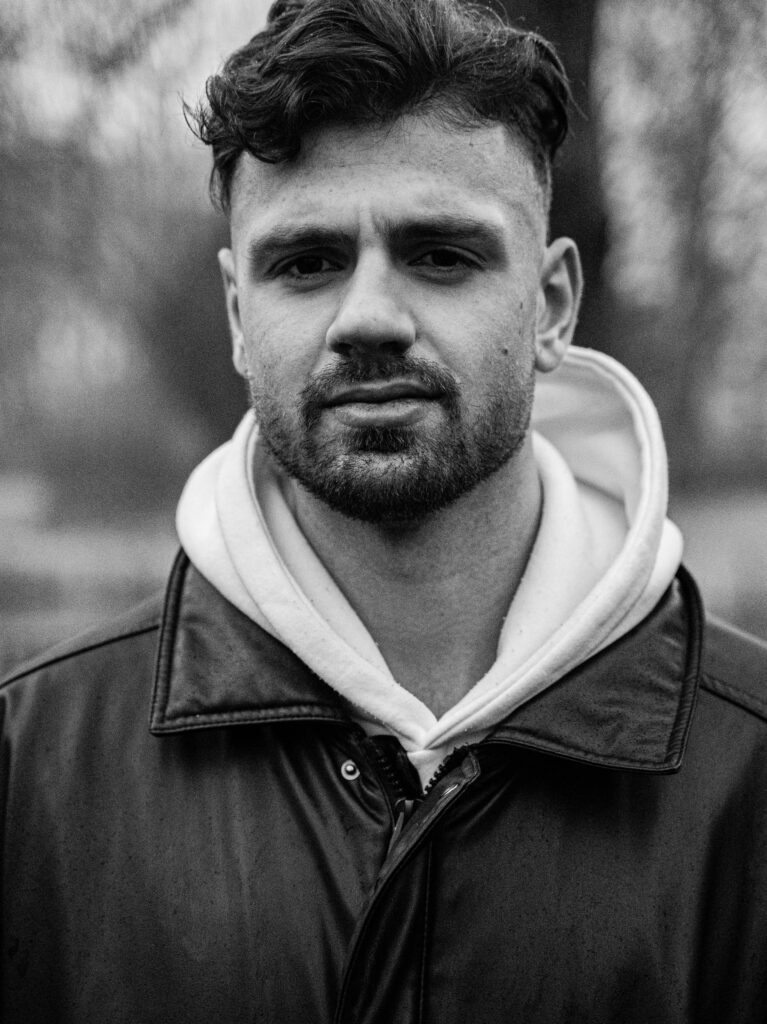
Christian Bech is a consciousness coach and mentor who works with entrepreneurs, leaders, and seekers who have outgrown surface-level self-help. The work behind The Father And I Are One is not motivation and it is not therapy. It is identity-level inquiry — looking directly at who you believe yourself to be underneath the stories, and watching what changes the moment that belief stops being automatic. People reach out to a consciousness coach when books, workshops, and willpower have stopped producing real movement.
Table of Contents
- The Path That Led to This Work
- What “The Father And I Are One” Means
- How a Consciousness Coach Works Differently
- The Principles Behind a Consciousness Coach’s Work
- Coaching, Therapy, and Mentoring — The Difference
- Who a Consciousness Coach Works With
- What to Expect From Working Together
- What Transformation Actually Looks Like
- Explore the Coaching Services
- Why Work With a Consciousness Coach Now
- Frequently Asked Questions
- Getting Started
- What a Longer Engagement With a Consciousness Coach Looks Like
- Common Misconceptions About Consciousness Coaching
- The Role of Honesty in the Work
- Is a Consciousness Coach Right for You Right Now?
- Book a Session With Christian
This page explains who Christian is, how he arrived at this work, what the name of the brand actually means, and what working together looks like in practice — without the guru theatre that usually surrounds this field.

The Path That Led to This Work
Christian did not start in coaching. He built businesses, travelled across continents, and lived through the kind of pressure that forces a person to either fragment or wake up. Years of studying consciousness, contemplative traditions, and the mechanics of the human mind eventually collided with lived experience — the realization that almost everything a consciousness coach encounters that people call a “problem” is downstream of an unexamined identity. The career crisis, the relationship pattern, the chronic self-doubt: each one tends to dissolve the moment the self underneath it is seen clearly.
That insight became the foundation of his practice as a consciousness coach. Not a method borrowed from a weekend certification, but a way of working forged from direct experience, wide reading across spiritual and psychological traditions, and thousands of honest conversations. The travelling never fully stopped — Christian works location-independently, which is part of why sessions are built to be just as effective over Zoom as they are in a room.
What “The Father And I Are One” Means
The phrase is borrowed from contemplative tradition, but it is not used here as religious doctrine. It points to a simple recognition: the awareness in which your whole life appears is not separate from the source of that life. The meaning is experiential — you are not a small, deficient self trying to earn worth, but awareness itself temporarily convinced it is small. You do not have to adopt any belief to do the work. You only have to be willing to look.
This is why the coaching draws on consciousness principles found across many traditions without belonging to any of them. The work is grounded in what you can verify in your own experience, not in what you are asked to take on faith. A client who is an atheist and a client who is devout can sit in the same session and both find it useful, because the inquiry happens beneath the level of belief.
How a Consciousness Coach Works Differently
Most coaching adds something: a new habit, a new mindset, a new affirmation stacked on top of the old self. This work does the opposite — it is subtractive. Instead of building a better version of the self-image, it questions the self-image itself. When the false structure is seen through, the behaviour that grew out of it loses its root. You do not have to force the new behaviour; it follows naturally from the shift in identity.
In practice this means sessions are direct. There is no script, no worksheet, no five-step framework to memorize. Christian meets whatever is actually present — the pattern you keep repeating, the decision you keep avoiding, the version of yourself you keep performing — and holds a mirror honest enough that you cannot look away from it. That honesty is the whole technology. Most people have never once been seen without an agenda attached, and being seen that way is often the thing that finally moves what years of effort could not.
The Principles Behind a Consciousness Coach’s Work
A few principles run through everything. First, honesty over comfort: you are treated as someone capable of real change, which means you will not be coddled or told you are already finished. Second, direct experience over belief: nothing is asked of you on faith. Third, respect for your autonomy: the work points, it does not push, and you remain the authority on your own life. Fourth, no manufactured dependence: the goal of a consciousness coach is not to keep you booking forever, but to return you to your own clarity so completely that you need the work less over time, not more. A consciousness coach who builds dependence has misunderstood the entire point.
Coaching, Therapy, and Mentoring — The Difference
People often ask how this differs from therapy. Therapy typically works with the past, with diagnosis, and with clinical symptoms; it is essential work and this is not a replacement for it. Coaching here is forward-facing and identity-oriented — it works with who you are being now and what becomes possible when that loosens. Mentoring adds the dimension of accompaniment over time: walking alongside someone through a sustained transformation rather than a single insight. Christian works across all three registers depending on what a person actually needs, and he will tell you plainly if what you need is a therapist rather than a coach.
Who a Consciousness Coach Works With
The people who get the most from this work tend to share one thing: they are done with surface-level fixes. Founders hitting an invisible identity ceiling no business book addresses. Leaders quietly questioning the life they built. People dismantling a toxic relationship pattern, rebuilding self-worth, or facing the particular crossroads that midlife and major transition bring. Seekers who have collected teachers for years and want to stop collecting and start seeing.

If you have tried therapy, read the books, attended the workshops, and still feel a deeper stuckness underneath it all, that stuckness is usually identity-shaped — and that is exactly what this work addresses. It is equally true that this is not for everyone. If you want affirmations, a quick fix, or to be told you are already enlightened, the fit will be wrong, and Christian would rather say so up front than take your money.
What to Expect From Working Together
Sessions with a consciousness coach run 60 to 90 minutes, remotely via Zoom or in person when geography allows, in English or German. They are private and confidential by default, recorded only with your explicit written consent. You do not need to prepare anything — you bring what is actually alive in your life right now, and the consciousness coach meets it there. Some people find a single session gives them the insight they were missing. Others work with Christian over months for identity-level transformation. Nothing is locked in; each session stands on its own.
What you will not get: a guru performance, a system to buy into, manufactured urgency, or spiritual bypass. What you will get is direct presence and what one client called “brutal kindness” — the combination that actually moves something. After each session you receive integration guidance, because insight that is not lived simply becomes another idea you collect.
What Transformation Actually Looks Like
Real change is rarely a fireworks moment. More often it looks like a pattern that used to run your life quietly losing its grip — the argument you do not have this time, the opportunity you stop talking yourself out of, the old story that no longer feels true when you reach for it. People describe it as becoming less effortful to be themselves, which is the only outcome a consciousness coach actually aims for. The work is considered successful not when you feel a temporary high, but when the way you move through ordinary life has shifted in a way that holds after the session ends.
Explore the Coaching Services
The work is delivered across ten focused coaching areas. Each one applies the same identity-level approach to a specific dimension of life:
- Toxic Relationship Coaching
- Self-Confidence Coaching
- Self-Love Coaching
- Consciousness Coaching
- Men’s Coaching
- Women’s Coaching
- Awakening Mentor
- Spiritual Coaching
- Life Coaching
- Astrology Coaching
Why Work With a Consciousness Coach Now
There is a specific moment that brings most people to a consciousness coach for the first time: the moment the old strategy stops working. The promotion arrives and the emptiness does not lift. The relationship ends and the same dynamic reappears with someone new. The business succeeds and the restlessness only sharpens. These are not failures — they are signals that the problem was never at the level you were trying to fix it. When external change stops producing internal change, that is precisely when identity-level work becomes worth doing. Waiting until the pressure is unbearable is common, but it is not required; the work is just as available when you are merely curious and honest.
Ready to go deeper? The offer that fits best:
1:1 Consciousness Mentoring — Healing From Within →The cost of postponing is subtle. Each year an unexamined identity runs the show is a year of decisions filtered through a self you never actually chose. A consciousness coach does not promise to fix your life — that framing keeps you small. The promise is narrower and more honest: to help you see clearly enough that your own next step becomes obvious.
Frequently Asked Questions
Do I need to be spiritual to work with a consciousness coach?
No. The work is grounded in direct experience, not belief. Religious, secular, and sceptical clients all use it productively, because the inquiry happens beneath belief rather than on top of it.
Is this a substitute for therapy?
No. If you are dealing with clinical depression, trauma, or a mental-health condition, therapy is the right setting and Christian will say so directly. Coaching here is forward-facing identity work, and it can run alongside therapy, not in place of it.
How quickly will I see results?
Some people leave a single session with a shift they can feel immediately; for others the change unfolds over weeks as a pattern quietly loses its grip. A consciousness coach cannot honestly promise a timeline, because the work depends on your willingness to look, not on a fixed protocol.
What happens in the very first session?
You bring whatever is most alive — a decision, a pattern, a question, a stuckness. There is no intake form to complete first. The session begins exactly where your real life is, and the looking starts there.
Can sessions happen in German?
Yes. Christian works in both English and German; choose whichever lets you be most honest. Just mention your preference when you book.
It is worth saying plainly: a consciousness coach is not a guru, not a healer, and not an authority on your life. The entire orientation of this work is to hand you back your own authority, not to take it. If at any point the relationship starts to feel like dependence rather than liberation, that is a signal something has drifted, and it gets named directly. The measure of good work here is not how indispensable the coach becomes, but how unnecessary — how fully you walk away able to see clearly on your own.
Getting Started
There is no application process and no funnel. You pick a time, you show up, and you bring whatever is most alive. The first session begins exactly where your real life is, and the work with a consciousness coach starts in that first honest conversation.
What a Longer Engagement With a Consciousness Coach Looks Like
A single session can deliver a real shift, but some people choose to work with a consciousness coach over months. That arc has a recognizable shape. Early sessions tend to clear the surface noise — the immediate decision, the loudest pattern — and establish the honesty the work runs on. The middle stretch is where the deeper structure shows itself: the identity that has been quietly organizing your choices for years. This is often the least comfortable phase, because seeing a pattern clearly removes the option of pretending you cannot see it. The later sessions are about integration — letting the shift settle into ordinary life until it stops feeling like work and starts feeling like simply how you are now.
Throughout, a consciousness coach is not steering you toward a predetermined outcome. The direction emerges from your own clarity. The role is to keep the mirror honest and the attention undivided, not to install a new set of beliefs to replace the old ones.
Common Misconceptions About Consciousness Coaching
The first misconception is that a consciousness coach will fix you. Nothing in this work assumes you are broken. The premise is the opposite — that you are already whole and have simply been identified with a story that obscures it. The second misconception is that the work is passive or purely contemplative. It is not. It asks for ruthless honesty and a willingness to act on what you see. The third is that it requires belief in something spiritual. It does not; the inquiry is empirical, tested against your own direct experience rather than accepted on authority.
A fourth misconception worth naming: that working with a consciousness coach means endless sessions and growing dependence. Done well, the work moves in the opposite direction. Each session should leave you slightly more able to do the looking yourself, until the coach becomes optional rather than necessary.
The Role of Honesty in the Work
If there is a single mechanism behind everything a consciousness coach does, it is honesty — yours and his. Most people spend their lives being seen through a filter: by family who need them to be a certain way, by colleagues who relate to a role, by a culture that rewards performance. Being met without that filter, even once, can dislodge something that years of effort could not. This is why the work is described as confronting and freeing in the same breath. The honesty is never cruelty; it is the refusal to collude with a story that is keeping you small.
Is a Consciousness Coach Right for You Right Now?
Timing matters less than readiness. You do not need to be in crisis to benefit from a consciousness coach — many clients come simply because they are curious and honest and sense there is more to see. But you do need to be willing to look at yourself without flinching. If you are looking for reassurance, for someone to agree that the problem is entirely external, or for a technique to apply without examining who is applying it, the timing is probably not right yet, and that is fine. The work will still be here when it is.
If, on the other hand, you have read the books, done the courses, maybe sat with therapists, and still feel a deeper stuckness that none of it reached — that is precisely the ground a consciousness coach works on. The next step is not more information. It is being seen clearly enough that your own clarity returns.
Book a Session With Christian
Sessions are booked directly through Christian’s calendar. Choose a time in any timezone and you receive a confirmation with the Zoom link. There is no intake funnel and no questionnaire — you book, you show up, and the work begins. For questions before you commit, write to office@christian-bech.com.

If you are not sure where to start, book a single session and simply bring what is most present. The clarity comes from looking at it together, honestly, in real time — not from having your situation pre-packaged before you arrive.